
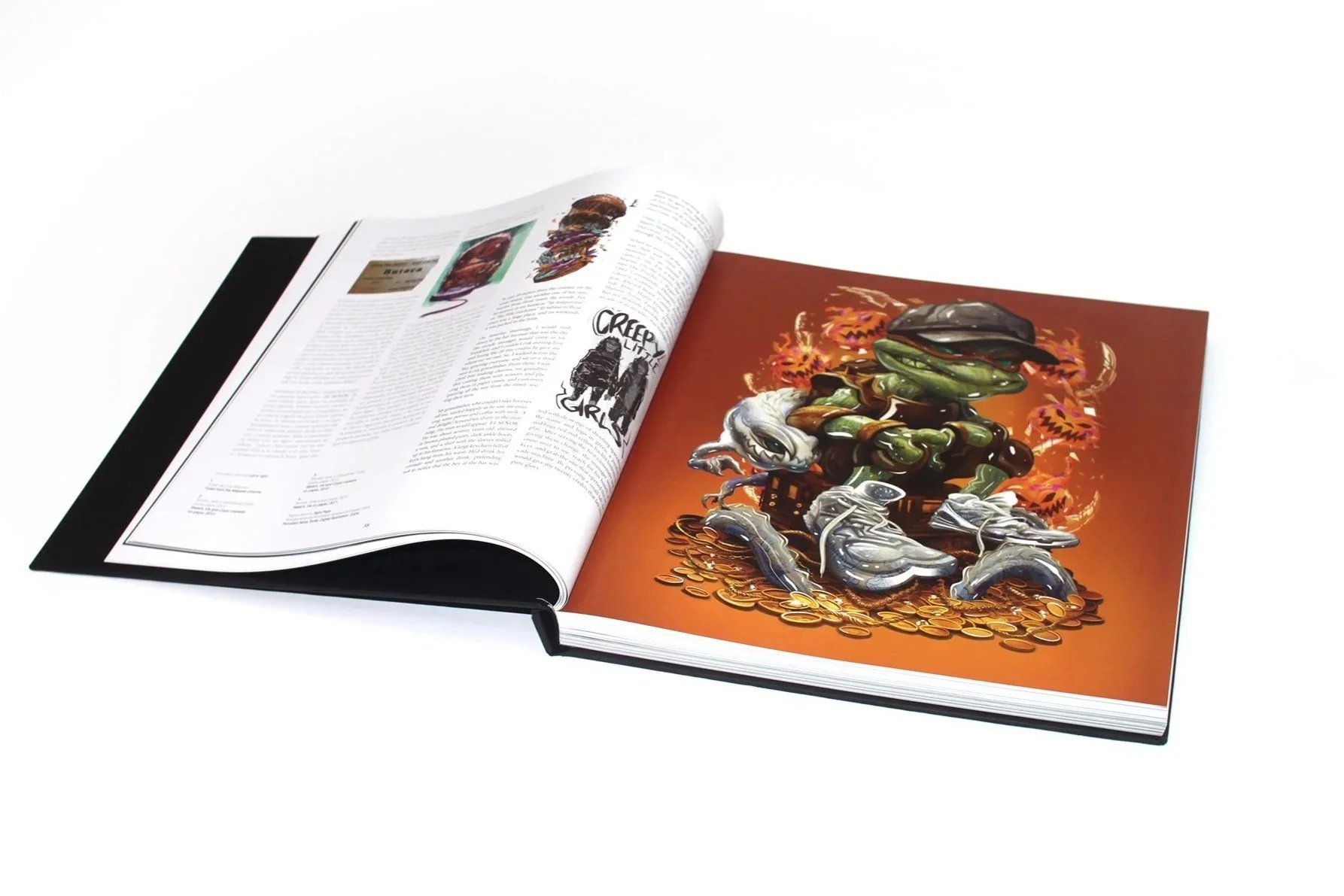
When I was a kid, on my way to school, I would always pass by a toy store near my house. It felt massive — even more so through the eyes of a child. In the window display you could see the latest releases: Masters of the Universe, Star Wars, Teenage Mutant Ninja Turtles, G.I. Joe, Tente, Lego… You didn’t search for things. They found you. Then you’d get to recess and talk about it with your friends.
Movies worked the same way. If you wanted to know something, you went to the theater. You stopped by the video rental store. You bought Fangoria magazine. There was movement. There was waiting. There was desire.
I’m telling you this because I want you to compare that world with today. That’s where this begins.
The way we experience information has changed completely. It doesn’t arrive anymore — it floods us. It hits from every direction, aggressively and constantly. Today everything is instant. If we have a question, we pull out our phone. If we want the name of a song, we know it in seconds. If we want a product, we buy it today and it’s at our door tomorrow.
Society has adapted to that speed. And in doing so, we’ve almost forgotten what it felt like to walk down the street and be surprised by something behind a shop window.
And that’s where this really starts.
Now we have AI. Automating processes. Replacing tasks. Optimizing what once required time, effort, and skill. So the question becomes unavoidable: if artificial intelligence replaces routine work, if it can generate images, designs, and even concepts in seconds — what happens to art?
And when I say art, I mean ART in capital letters. The kind that comes from a biography. The kind that’s built over years. The kind that isn’t just output — but process.
Instead of quoting statistics or research papers floating around the internet, I’ll explain it my way.
Picture this. We’re standing in front of the DeLorean from Back to the Future. Doc is there, impatient, shouting, “Come on! We don’t have much time!” We jump in. The date is set: June 25th, 2046. The engine roars, we hit 88 miles per hour, and in a flash we land on the same road — twenty years into the future.
We spend a few days visiting galleries, artist studios, exhibitions. We look carefully at what the cultural landscape has become after the AI explosion. Because the explosion happened. Millions of images generated in seconds. Styles replicated endlessly. Creativity turned into instant product. The world became saturated with flawless visuals — polished, optimized, technically perfect.
Too perfect. Too optimized. Too frictionless.
And something inevitable happened.
When everything can be generated, nothing feels rare.
When everything is instant, nothing builds anticipation.
When everything is perfect, nothing feels human.
By 2046 society understood something that in 2026 we’re still debating: value doesn’t live in the result anymore. It lives in the origin. The question stopped being “What am I looking at?” and became “Who made this — and why?”
AI could replicate styles. It could generate concepts. It could simulate aesthetic language. But it couldn’t have a childhood. It couldn’t have obsession. It couldn’t carry contradictions, scars, failures, lived experience. It couldn’t risk anything. It couldn’t spend twenty years refining a vision.
The market polarized. The functional, the intermediate, the replaceable became automated. The exceptional, the personal, the irreducibly human became scarce. And scarcity creates value.
The imperfect brushstroke began to matter more than the flawless render. The human error became proof of presence. Biography mattered more than prompt engineering.
The people who once sold empty work wrapped in inflated discourse were exposed. Because if art was just concept packaged well, the machine could do it faster and cleaner. Once artificial aesthetics became infinite, authenticity became indispensable. Art stopped being trend-driven and returned to being testimony.
In that future, the artists who endured were the ones who stayed consistent with their vision. The ones who built identity instead of chasing the next wave. They weren’t competing with AI — they were operating in a different category. AI optimized production. They embodied experience. AI generated images. They transmitted perspective. AI simulated intention. They had necessity.
And art, at its core, is born from necessity.
In 2046 artists weren’t thriving because the world became romantic. They were thriving because the system finally understood something fundamental: human work may not be efficient, but it is irreplaceable. Once thousands of automatable roles disappeared, value concentrated around what could not be delegated.
If you no longer need to manufacture controversy or chase hype to survive, what’s left?
You create from your own lens.
Spirituality? Call it whatever you want. But the art that lasts doesn’t come from optimization. It comes from something that cannot be quantified. It’s imperfect. It’s irrational. It’s deeply human. And that’s precisely why it connects.
By 2046 art didn’t disappear. It purified itself. Many opportunists who once lived off noise were replaced by well-written prompts. What remained were the artists who actually had something to say.
Maybe in twenty years we won’t remember most of the AI-generated images from 2026 — just like we don’t remember most of yesterday’s flawless renders. But we will remember the artists who refused to outsource their voice in the middle of the noise. Because when everything can be produced, the only thing that truly matters is who stands behind the work. AI will not decide what art is. Time will. And time has always chosen what has roots over what only has speed.
If you’re curious about what real process looks like behind the surface of a finished piece, I documented mine in detail inside my masterclass — from concept to final execution.